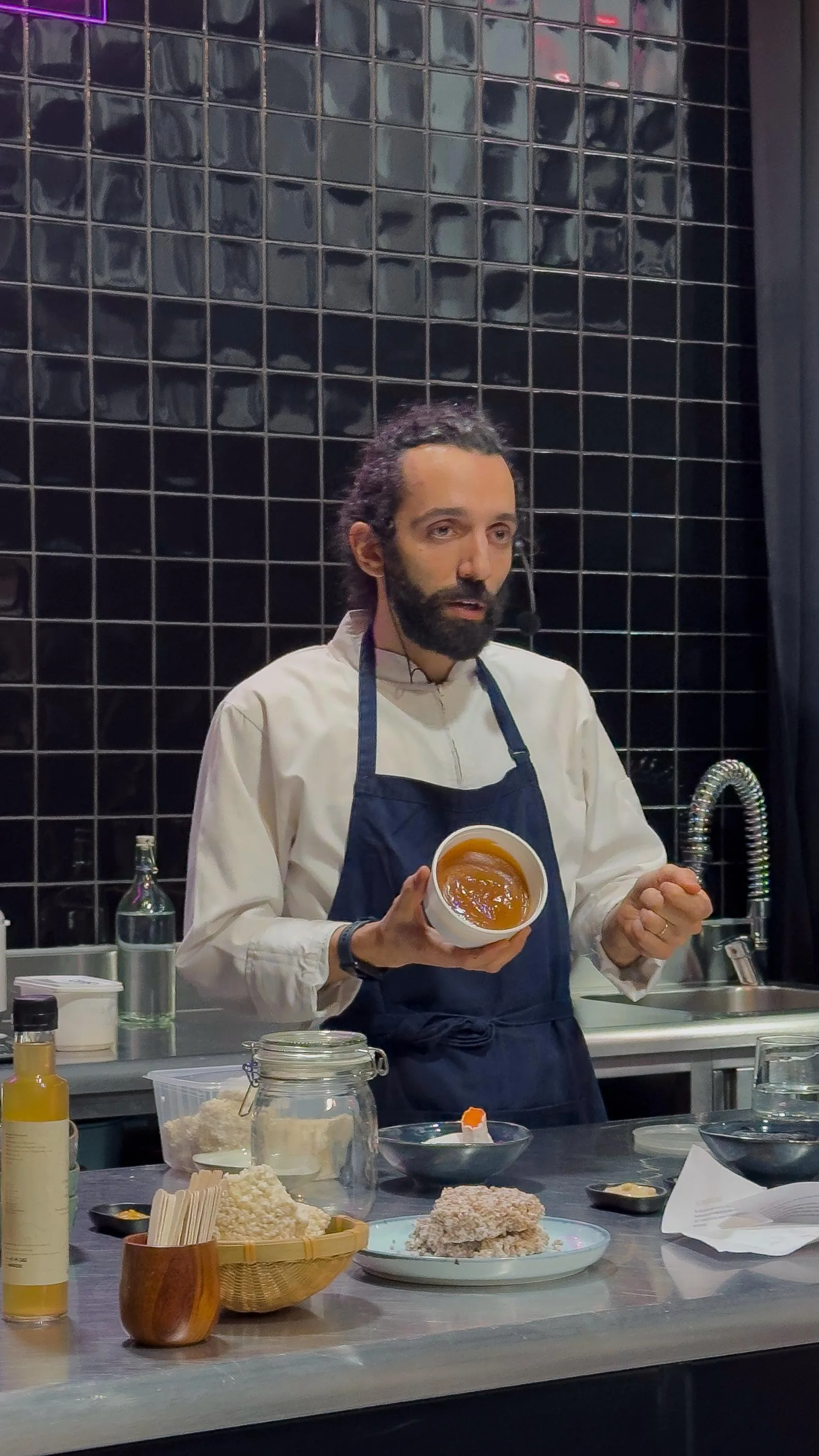
Before the jars there were kitchens. And before the kitchens, a family table.
He founded Kin Ferments in 2022, in his own name. He works with Portuguese ingredients grown organically and through regenerative agriculture, and lets them change with time.
The family was in the restaurant trade. His grandfather led the Choupana, the Estoril landmark, for many years, and it is from him that the inspiration comes which pointed the way early towards food.
He trained at the Estoril Hotel and Tourism School. His first contact with the profession came through chef Paulo Morais.
And then, Japan.
In Japan I saw production and fermentation techniques I had never come across. I had worked with things like miso and soy sauce before, but I had no idea how they were made.
The first thing I fermented was a sourdough starter, and then bread — but it took me a long time to get it right.
The path took in well-regarded houses. At the last of them, he ran the brigade.
I left the Michelin kitchen behind because I felt that there I could put together incredible combinations of flavour, but they reached very few people — we served only 20 dinners. So I thought about democratising those flavours, taking them to people's own tables.

Kin Ferments was born of a concrete intent: to develop new sources of food, cut food waste and build structures for upcycling.
At the end of the line are living foods, made by fermentation, widening the range of products available to everyone.
It hurts me to see anyone throw away an ingredient that could still be transformed and eaten.
If there were only one ferment, which would he choose?
It would be koji — for what it demands of you, but even more for the symbiosis I feel with the microorganisms growing through the process.
Misos. Shoyus. Koji and shio koji. Amazake. Fermented broths, marinades, sauces, spreads and drinks.
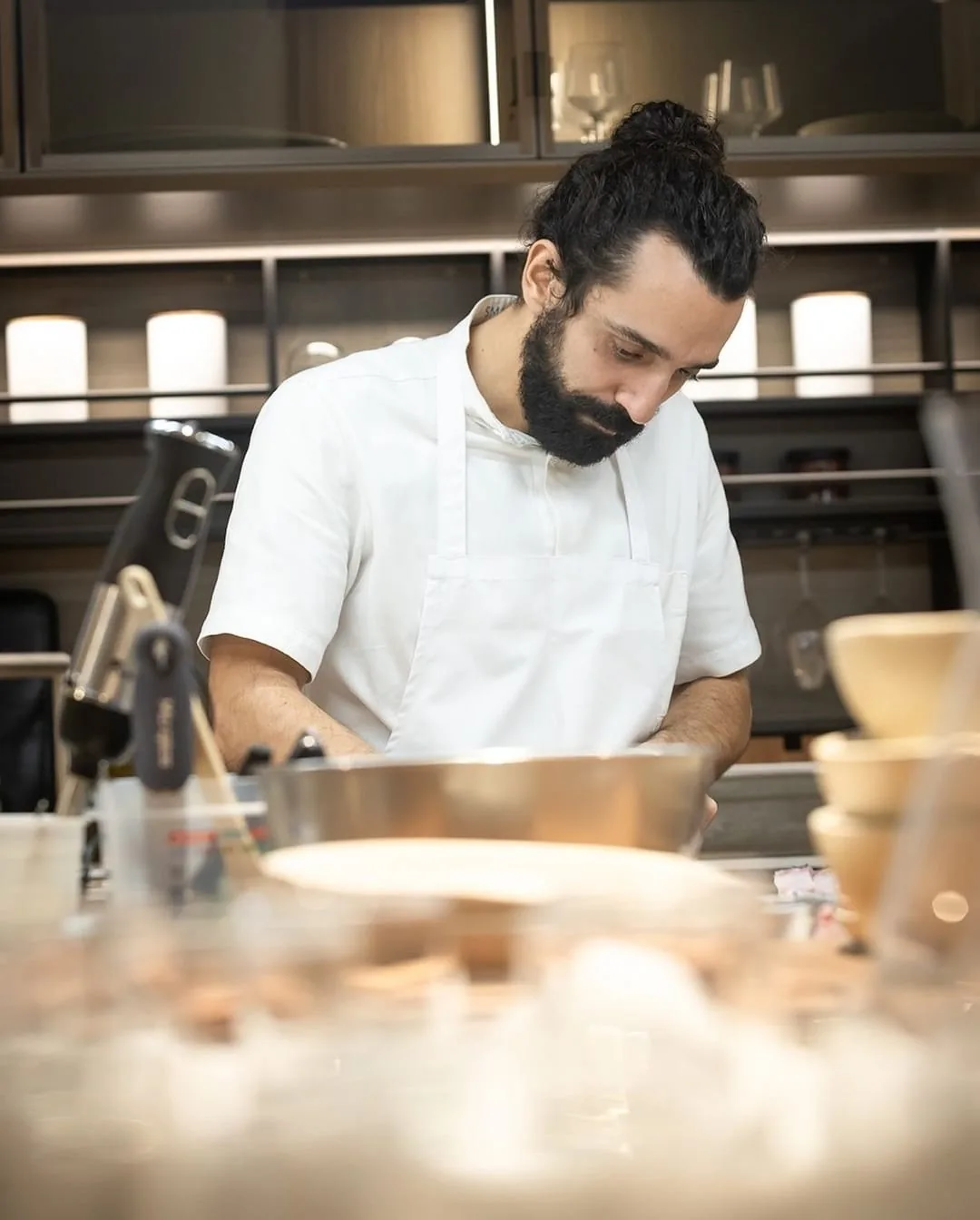
The jars are in the shop, and the workshops are where you learn to make them.